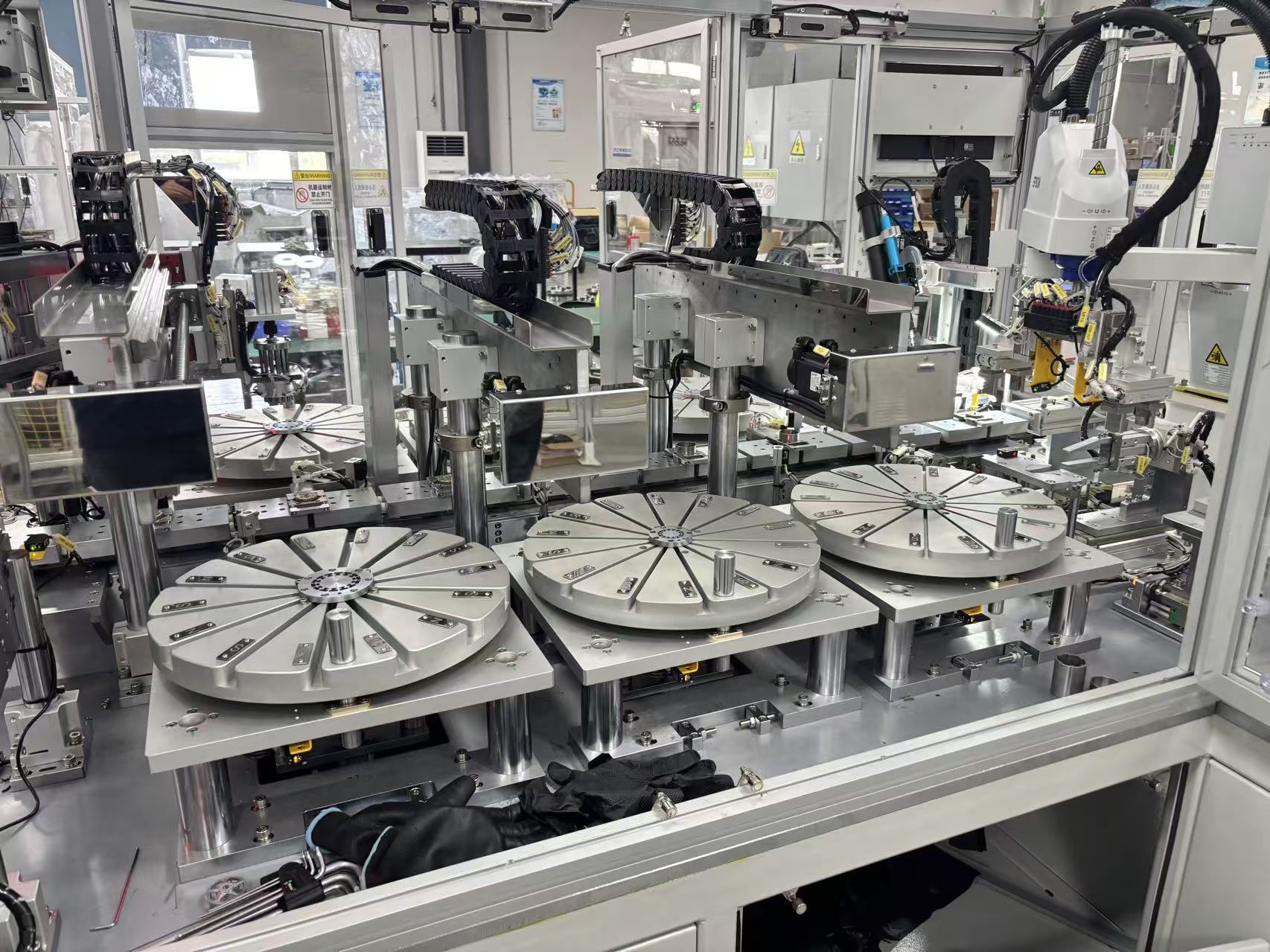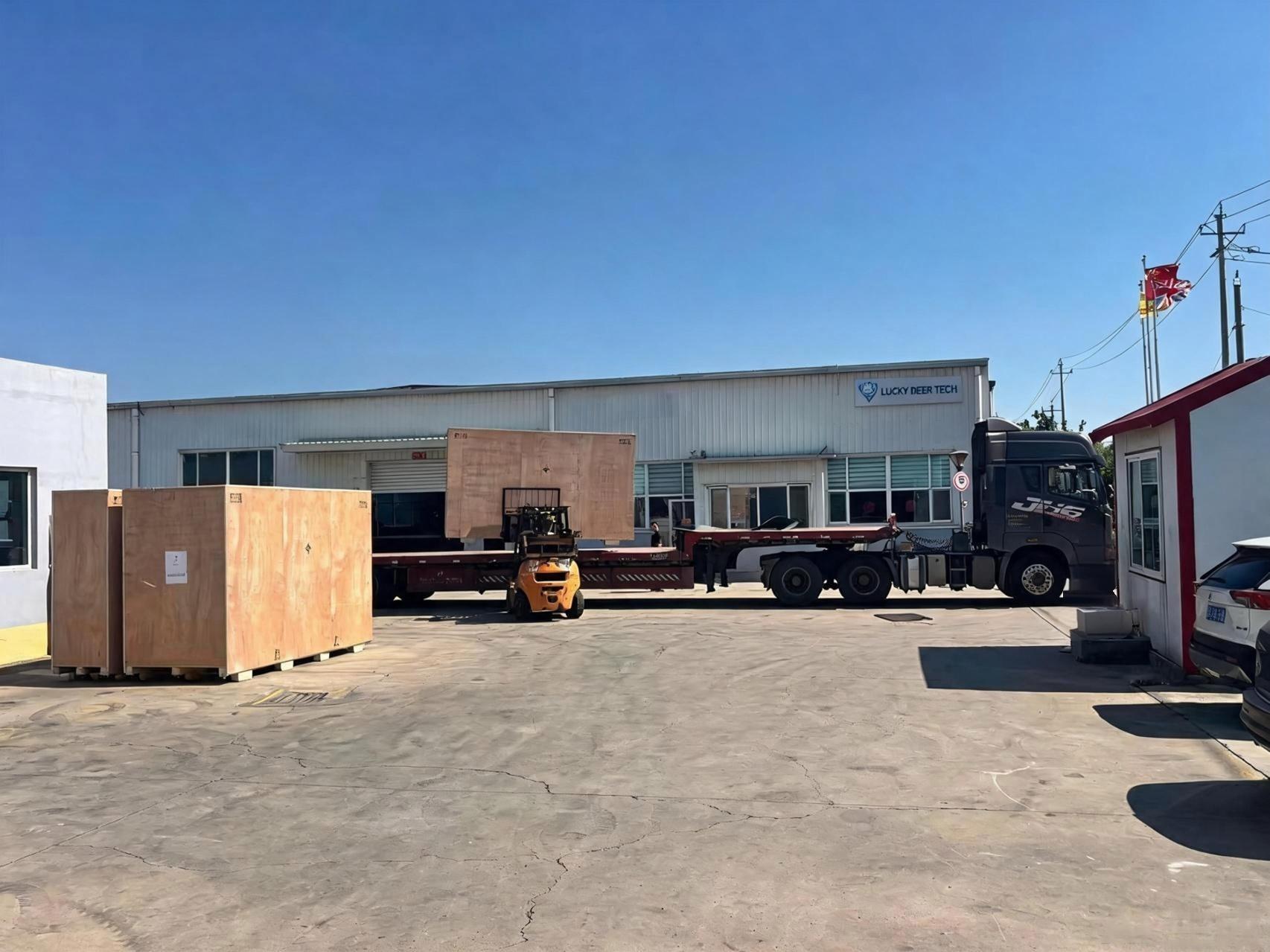
In September 2026, Lucky Deer Tech completed the delivery of a drone motor assembly line to an overseas customer. The line was engineered to build five different drone motor models on one platform, at a takt time of 40 seconds per motor, with a design equipment availability of 85 percent.
Drone motor manufacturing has become one of the most demanding corners of motor production. Volumes are rising fast, model cycles are short, and the tolerance for imbalance or winding variation is far tighter than in most appliance or industrial motor programs. This project was built around that reality: one line, five models, and a repeatable process window that does not depend on operator skill.
Why drone motor assembly is a different problem
A drone motor is small, light, and expected to spin at high speed with very little vibration. Three requirements drive almost every design decision:
1. Rotor balance. Any imbalance shows up directly as airframe vibration, which shortens flight time and degrades camera and sensor performance. Rotor assembly has to control magnet placement accuracy and run balancing, not just fit parts together. 2. Winding consistency. Copper fill and slot insulation quality determine torque per amp. On a battery-powered aircraft, that translates directly into flight time, so winding repeatability is a product requirement rather than a process nicety. 3. Model mix. Drone programs rarely run one motor for years. A line that only builds one model becomes scrap when the next airframe launches, so changeover capability matters as much as cycle time.
One line, five motor models
The delivered line handles five drone motor models without a mechanical rebuild. Model selection is made at the control system, which calls up the matching programs for the winding machine, the magnet insertion machine, and the test stations. Fixtures and pallets are shared across the model range, and changeover is a program change plus a fixture swap rather than a re-commissioning exercise.
For a customer running a growing drone motor catalogue, this is usually the deciding factor. The alternative, a dedicated line per model, multiplies floor space, operators, and capital by the number of models in the catalogue.
How the line is organised: three sections
The line is arranged as three connected sections feeding a shared conveyor backbone.
1. Stator assembly section. Laminated cores are loaded, insulated, and wound. The stator winding machine is the core station here, purpose built for the slot geometry and wire gauge of the customer's five models. Wound stators are tested for resistance, insulation, and surge before they leave the section, so a winding fault is caught at the station that created it. 2. Rotor assembly section. Shafts, cores, and magnets are assembled here, with the rotor magnet insertion machine handling magnet placement and pressing. Because magnet position and orientation drive balance and cogging behaviour, this station is the most accuracy-sensitive part of the line. Rotors are balanced inline before moving on. 3. Motor final assembly section. Stators, rotors, bearings, and housings come together, followed by end-of-line testing covering electrical performance, noise, and vibration. Serialised test data is recorded so every motor leaving the line can be traced back to its process parameters.
Each section can be run independently for maintenance or pilot builds, which is what allows the line to reach its design availability while still supporting engineering change on one model at a time.
Core equipment
Beyond the conveyor system, the line is built around custom-engineered stations rather than general-purpose machines:
1. Stator winding machine, configured for the five model variants with automatic program selection. 2. Rotor magnet insertion machine, handling magnet orientation checking, insertion, and press-fit verification. 3. Purpose-built stations for insulating, pressing, balancing, and testing, each designed around the customer's part geometry. 4. Inline test and traceability stations, recording electrical and mechanical results against each motor's serial number.
This is what non-standard automation means in practice: the machine is designed around the part, not the part around the machine.
Layout, conveying, and manpower
The backbone of the line is a double-speed chain conveyor system, which lets pallets accumulate at stations without stopping the whole line. That accumulation behaviour is why five operators can run the line: a station that needs a few extra seconds does not stall upstream or downstream.
Total floor space is approximately 224 square metres, including all three sections, the conveyor loop, and operator access. Five operators cover loading, supervision, and final pack-out.
Performance at a glance
1. Application: drone motor assembly, five models on one line. 2. Takt time: 40 seconds per motor, which is a nominal 90 motors per hour and roughly 76 finished motors per hour at the design availability. 3. Equipment availability: 85 percent, including model changeovers and planned maintenance. 4. Conveying: double-speed chain conveyor backbone with pallet accumulation. 5. Floor space: approximately 224 square metres. 6. Manpower: five operators. 7. Structure: stator assembly section, rotor assembly section, and motor final assembly section. 8. Delivery: September 2026.
What we learned building it
Three points carry over to any drone motor line we take on next. Design for model mix from the start, because a drone motor catalogue changes faster than the line's depreciation schedule. Put test capacity at every section rather than only at the end, so faults are found where they are made. And size the conveyor for accumulation, because that is what lets a small crew run a fast line without constant stoppages.
Planning a drone motor line of your own? We build turnkey motor assembly lines covering stator winding, rotor magnet insertion, final assembly, and end-of-line testing, with changeover designed in from the first layout. Share your motor drawings, model list, and target volume, and we will size the line for you.
Product page: https://www.ldmotortech.com/en/products/motor-assembly
Related equipment: motor lamination stamping automation at https://www.ldmotortech.com/en/products/stamping and rotor die casting islands at https://www.ldmotortech.com/en/products/die-casting